
When configuring network settings, understanding the naming conventions is crucial. The characters that precede a computer’s name on a network play a significant role in identifying and distinguishing devices within a network.
Naming conventions vary across different systems and organisations, but certain prefixes are commonly used to signify specific types of devices or roles within a network.
Readers exploring two characters precede often end up considering kling videos private understanding as part of the same topic.
The use of specific prefixes or characters before a computer’s name can help in categorising devices, making network management more efficient. For instance, certain prefixes might denote the device type or its function within the network infrastructure.
Understanding these conventions is essential for network administrators to manage and troubleshoot networks effectively.
Understanding Computer Names on Networks
Understanding how computer names function is essential for effective network management. Computer names are used to identify devices on a network, making it easier to manage and communicate with them.
The Purpose of Computer Names
Computer names serve as unique identifiers for devices on a network. They enable administrators to distinguish between different devices, facilitating tasks such as network monitoring, troubleshooting, and resource allocation. By assigning descriptive names, organisations can streamline their network management processes.
The use of meaningful computer names also enhances network security. By clearly identifying devices, administrators can quickly detect and respond to potential security threats.
The Anatomy of a Network Computer Name
A network computer name typically consists of a combination of letters, numbers, and sometimes special characters. The structure of a computer name can vary depending on the organisation’s naming conventions. For instance, some organisations may use a prefix to indicate the device type or location.
Understanding the components of a computer name is crucial for maintaining a well-organised network. By adopting a consistent naming scheme, organisations can simplify network management and reduce the risk of naming conflicts.
What Two Characters Precede a Computer Name on the Network
In network administration, the characters preceding a computer name hold significance. These characters can provide crucial information about the device’s role, location, or type within the network.
Common Two-Character Prefixes
Several common two-character prefixes are used in network naming conventions. For instance, ‘PC‘ might precede a computer name to indicate it’s a personal computer, while ‘SV‘ could denote a server.
Other prefixes like ‘FS‘ for file servers or ‘WS‘ for workstations are also commonly used. The use of such prefixes helps in categorising devices based on their functions or types.

The Significance of These Prefixes
The use of specific prefixes can significantly enhance network management. By identifying the type or function of a device through its name, administrators can quickly understand the device’s role within the network.
This can be particularly useful in large networks where numerous devices are connected. For example, a prefix can help in distinguishing between different departments or locations within an organisation.
The Role of Prefixes in Network Organisation
In network organisation, prefixes serve as a vital tool for classifying and managing network devices. This classification is crucial for maintaining a structured and efficient network. By using prefixes, network administrators can quickly identify the type and function of devices on the network.
Categorising Devices by Type
Prefixes enable the categorisation of devices based on their type or function within the network. For instance, a prefix like “PRT-” might be used for printers, while “SRV-” could denote servers. This categorisation aids in the swift identification of device roles.
| Prefix | Device Type | Example |
|---|---|---|
| PRT- | Printer | PRT-HP-LaserJet |
| SRV- | Server | SRV-Web-Server1 |
| CLT- | Client | CLT-User-PC1 |
Streamlining Network Management
The use of prefixes streamlines network management by making it easier to apply policies, monitor performance, and troubleshoot issues. With a well-structured naming convention, administrators can efficiently manage the network and ensure that devices are properly configured.
By implementing a consistent prefix system, organisations can enhance their network’s overall efficiency and reduce the complexity associated with device management.
Standard Naming Conventions for Network Computers
Adopting a consistent naming convention for network devices is a best practice that enhances network organisation. Standard naming conventions facilitate the identification and management of computers within a network, making it easier for administrators to perform tasks and troubleshoot issues.
Industry-Standard Practices
Industry-standard practices for naming network computers often involve a combination of letters and numbers that signify the device’s location, type, or purpose. For instance, a computer named “NYC-SALES-01” could indicate that the device is located in New York City (NYC), is used by the sales department, and is the first device of its kind.
Some common practices include:
- Using geographical locations to identify devices
- Incorporating departmental or functional information
- Assigning unique identifiers for devices with similar purposes
Microsoft Windows Naming Conventions
Microsoft Windows has its own set of naming conventions for computers on a network. These conventions dictate that computer names should be no more than 15 characters in length and can include letters, numbers, and hyphens.
| Naming Convention | Description | Example |
|---|---|---|
| Location-Dept-Number | Combines location, department, and a unique number | NYC-SALES-01 |
| Dept-Location-Number | Prioritises department over location | SALES-NYC-01 |
| Function-Number | Focuses on the device’s function | PRINT-01 |
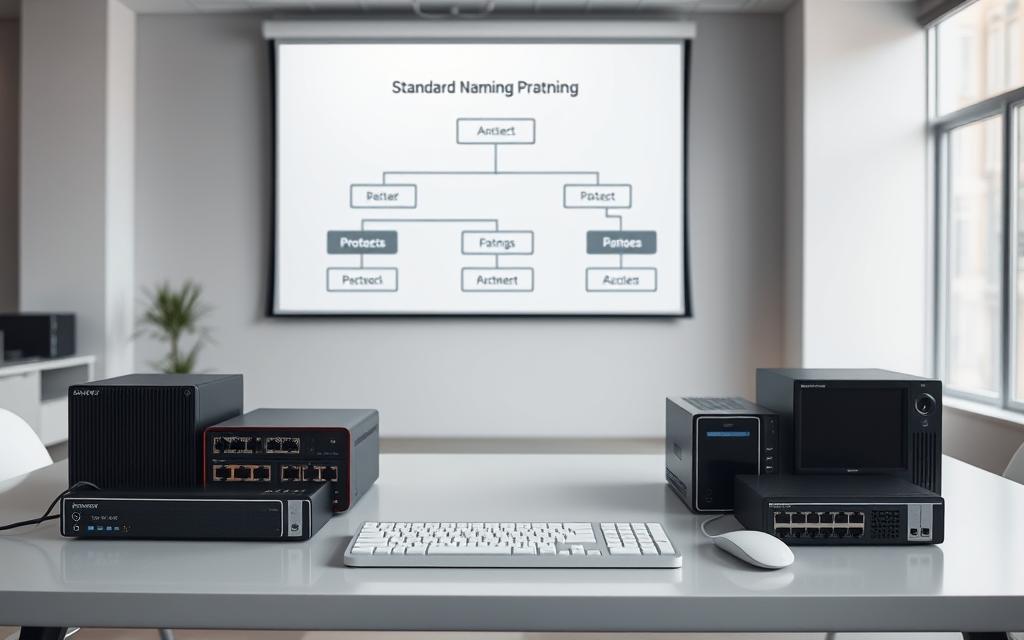
By adhering to these conventions, organisations can maintain a structured and understandable naming scheme for their network devices, enhancing overall network management and efficiency.
Technical Limitations and Requirements for Computer Names
Understanding the technical limitations and requirements for computer names is vital for maintaining a well-organized network. Computer names are not arbitrary; they are governed by specific rules and constraints that ensure compatibility and functionality across different systems and networks.
Character Restrictions in DNS
The Domain Name System (DNS) plays a crucial role in resolving computer names to IP addresses. As such, computer names must adhere to the character restrictions imposed by DNS. Allowed characters typically include letters (a-z, A-Z), numbers (0-9), and hyphens (-). However, names should not start or end with a hyphen, and certain reserved characters are not permitted. “The DNS specification dictates that domain labels can only use the ASCII character set,” as noted in relevant RFC documents. This restriction ensures that computer names can be resolved correctly across the internet.
Length Limitations for Computer Names
Another critical aspect is the length limitation for computer names. In most systems, the maximum length for a computer name is limited. For instance, in Windows environments, the limit is typically 63 characters for the NetBIOS name and up to 255 characters for the fully qualified domain name (FQDN). It’s essential to strike a balance between descriptive names and these length constraints. As one IT expert puts it, “A well-chosen name is one that is both meaningful and concise, facilitating easy identification and management of network resources.”
Adhering to these technical limitations and requirements is crucial for ensuring seamless network operations and avoiding potential conflicts or resolution issues.
Implementing an Effective Computer Naming System
A well-structured computer naming system is the backbone of efficient network management. It enables administrators to identify and manage devices easily, reducing the complexity associated with network maintenance.
Creating a Consistent Naming Scheme
Developing a consistent naming scheme is the first step towards an effective computer naming system. This involves establishing a standard format for naming devices based on their function, location, or type. For instance, using a prefix to denote the device type (e.g., “LAP” for laptops, “SRV” for servers) can simplify device identification.
A consistent naming scheme also facilitates the organisation of devices into categories, making it easier to manage and monitor network activities. It is essential to document the naming convention and ensure that all team members understand and adhere to it.
| Device Type | Naming Convention | Example |
|---|---|---|
| Laptops | LAP-[Department]-[Number] | LAP-MKTG-01 |
| Servers | SRV-[Function]-[Number] | SRV-WEB-01 |
| Printers | PRT-[Location]-[Number] | PRT-HQ-01 |
Documentation and Enforcement
Documentation is critical to the success of a computer naming system. It is essential to maintain detailed records of the naming scheme, including the conventions used and the rationale behind them. This documentation serves as a reference guide for network administrators and helps in training new staff members.
Enforcing the naming convention is equally important. Regular audits should be conducted to ensure compliance, and any deviations should be addressed promptly. Automated tools can also be used to enforce naming conventions and detect inconsistencies.
“A consistent naming convention is not just about aesthetics; it’s about functionality and scalability. It directly impacts the manageability and security of your network.”
Advanced Computer Naming Strategies
Advanced computer naming strategies are crucial for maintaining organisation and efficiency in complex networks. As networks grow and become more intricate, a well-planned naming strategy ensures that devices are easily identifiable and manageable.
Location-Based Naming
Location-based naming involves incorporating the physical or geographical location of a device into its name. This approach can be particularly useful in large organisations with multiple sites or campuses. For example, a device named “LONDON-SRV-01” clearly indicates that the server is located in London. This method simplifies the process of identifying device locations and can aid in network management and troubleshooting.
Function-Based Naming
Function-based naming focuses on the role or function of a device within the network. This strategy involves naming devices according to their purpose or the service they provide. For instance, a device named “MAIL-SRV-01” indicates that it is a mail server. This approach helps in quickly understanding the device’s function and can facilitate tasks such as inventory management and network planning.
Hybrid Naming Approaches
Hybrid naming approaches combine different naming strategies, such as location-based and function-based naming, to create a more robust and informative naming scheme. For example, a device named “LONDON-MAIL-SRV-01” conveys both its location and function. This hybrid approach can offer the benefits of multiple naming strategies, enhancing clarity and organisation within the network.
Troubleshooting Computer Name Issues on Networks
Troubleshooting computer name issues on networks is crucial for maintaining a stable and efficient IT infrastructure. Computer names are used to identify devices on a network, and issues with these names can lead to communication breakdowns between devices.
Common Naming Conflicts
Naming conflicts occur when two or more devices on the same network have the same or very similar names. This can cause confusion and errors, particularly in environments where devices are frequently added or removed. Common causes of naming conflicts include inadequate naming conventions, lack of documentation, and human error during device setup.
To mitigate these issues, it’s essential to implement a robust naming convention that includes unique identifiers for each device. Regular audits of network devices can also help identify potential conflicts before they become problematic.
Resolving Duplicate Names
Resolving duplicate names requires a systematic approach. First, identify the devices with conflicting names using network scanning tools or Active Directory searches. Once identified, rename the devices according to your organization’s naming conventions. It’s also crucial to update any relevant documentation and notify users of the changes to avoid future conflicts.

Conclusion
Ultimately, the correct use of prefixes in computer names is key to maintaining a well-organised network. By understanding the significance of these prefixes and adhering to standard naming conventions, network administrators can streamline device identification and reduce the likelihood of naming conflicts. Implementing a consistent naming scheme and maintaining thorough documentation are crucial steps in achieving this goal.
Effective computer naming strategies, including location-based and function-based naming, can further enhance network organisation. By adopting these strategies, organisations can improve their ability to manage and troubleshoot their networks. In conclusion, a well-planned computer naming system is essential for efficient network management.
FAQ
What is the significance of a fully qualified domain name (FQDN) in a network?
A fully qualified domain name (FQDN) is crucial in a network as it provides a unique identifier for a device, comprising the host name and domain name, enabling accurate communication and resource location.
How do host names and domain names differ?
A host name identifies a specific device within a network, whereas a domain name represents the network or organisation to which the device belongs, with the FQDN combining both to provide a unique address.
What are the common naming conventions for network devices?
Common naming conventions include using a combination of letters and numbers to identify devices, with Microsoft Windows environments often employing a specific format, such as using a prefix to indicate device type or location.
What are the technical limitations for computer names in a network?
Computer names are subject to character restrictions in DNS and length limitations, typically not exceeding 63 characters, to ensure compatibility and functionality within the network.
How can a consistent naming scheme be implemented?
Implementing a consistent naming scheme involves establishing clear guidelines and documentation, categorising devices by type or location, and enforcing these conventions across the network to ensure organisation and ease of management.
What are the benefits of using a hybrid naming approach?
A hybrid naming approach, combining elements of location-based and function-based naming, offers flexibility and clarity in identifying devices, facilitating network management and resource location.
How can naming conflicts be resolved?
Naming conflicts can be resolved by identifying duplicate names, reconfiguring devices to use unique identifiers, and ensuring adherence to established naming conventions to prevent future conflicts.
What role do prefixes play in network organisation?
Prefixes help categorise devices by type or location, streamlining network management by providing a clear indication of a device’s purpose or role within the network.


 By
By